
READ Project Approves Key Course and Training Deliverables at Extraordinary PMC Meeting
The Renewable Energy Advancement for Inclusive Development in Sub-Saharan Africa (READ) Project convened an Extraordinary Project Management Committee (PMC) Meeting on Saturday, 29 August 2026, bringing together representatives from the project’s African and European partner universities to review key deliverables and confirm preparations for the next phase of implementation.
The meeting was attended by coordinators from consortium members chaired by Mr Mohamed Okash, SIMAD University, Ms Anab Siyad, Mogadishu University (MU), Dr Abdalla Ali, CapitalUniversity of Mogadishu (CUS), Dr Dominic Fuluegence, St. Augustine University of Tanzania (SAUT), Dr Stephen Karama, University of Dar es Salaam (UDSM), Dr Cyprian Kambil , University of Malawi, Dr Dulcu Gonul, Dumlupınar University (DPU) in Türkiye, and Prof Paola Verde, University of Cassino and Southern Lazio (UNICAS) in Italy.
The Extraordinary PMC focused primarily on the review and approval of two important academic deliverables: D2.2 – Course Materials and D2.3 – Training of Trainers Programme Design. The Committee also reviewed preparations for upcoming faculty capacity-building activities in Türkiye and Italy. Following discussion and review, the PMC formally approved both deliverables and endorsed the upcoming implementation activities.
D2.2 – Course Materials Approved
The PMC approved D2.2 – Course Materials, developed under the leadership of Dumlupınar University (DPU) with contributions and peer review from consortium partners. The deliverable provides a structured set of modular learning materials designed to support the teaching of renewable energy within undergraduate programmes at participating universities.
The materials comprise at least 10 renewable energy modules and are intended for both students and academic instructors. Their development has involved academic review and validation across consortium institutions to strengthen the quality, relevance and applicability of the content. Approval of D2.2 marks an important transition from curriculum development toward actual course delivery within African partner universities.
D2.3 – Training of Trainers Programme Design Approved
The Committee also approved D2.3 – Training of Trainers Programme Design, also led by DPU. The programme provides the framework for strengthening the capacity of academic staff who will deliver the newly developed renewable energy curriculum. It combines technical renewable energy knowledge with pedagogical skills, teaching methodologies and approaches to effective course delivery.
The ToT programme is expected to support the adoption of the curriculum across participating institutions and strengthen the ability of lecturers to deliver high-quality, practice-oriented renewable energy education.
Faculty Training in Türkiye: 21–25 September 2026
With the ToT Programme Design now approved, the READ consortium will move into its next major capacity-building activity. Academic staff from participating African universities will attend the Training of Trainers programme at Dumlupınar University in Kütahya, Türkiye, from 21–25 September 2026.
The programme will strengthen participants’ competencies in renewable energy course delivery, teaching methodologies and pedagogy. Participants will also work with the newly developed course materials and explore approaches for adapting the curriculum to their respective institutional and national contexts. The training is intended to prepare faculty members to effectively deliver the new renewable energy course when implementation begins within partner universities.
Research Training in Italy: 10–16 October 2026
The ToT programme will be followed by a dedicated research capacity-building programme at the University of Cassino and Southern Lazio in Italy from 10–16 October 2026. The programme will strengthen the research competencies of participating academic staff, with particular emphasis on renewable energy research, academic writing, research methodologies and collaborative knowledge production.
The activity is expected to contribute to stronger research collaboration between African and European partner universities and support the development of research papers, policy-oriented knowledge products and future academic cooperation in renewable energy and sustainable development.
From Curriculum Development to Course Delivery
The approval of D2.2 and D2.3 represents an important milestone in the READ Project’s transition from curriculum design to implementation. Following the faculty training activities in Türkiye and Italy, participating institutions will advance the delivery and institutionalisation of the project’s ECTS-aligned Renewable Energy course within their academic programmes.
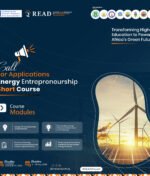
The project will also support the development and delivery of a short professional certification course in Renewable Energy, extending learning opportunities beyond undergraduate students to professionals and other learners seeking practical renewable energy knowledge and skills.
Together, these activities are designed to strengthen the capacity of universities to respond to the growing demand for skills, research and expertise required for the energy transition.
Strengthening Universities for Africa’s Energy Transition
Africa’s transition toward cleaner and more sustainable energy systems will require more than technology and infrastructure. It will also require universities capable of educating skilled professionals, producing locally relevant research, and supporting innovation and evidence-based decision-making.
Through curriculum development, academic staff training, research collaboration and institutional capacity building, the READ Project is strengthening the role of higher education institutions in preparing the human capital required for this transition.
The 29 August Extraordinary PMC Meeting therefore represents more than the approval of two project deliverables. It marks the beginning of a new implementation phase in which the curriculum, teaching materials and faculty development programmes will increasingly translate into practical learning opportunities for students and professionals.
The consortium will now focus on successful delivery of the Training of Trainers in Türkiye from 21–25 September 2026, the Research Training in Italy from 10–16 October 2026, and subsequent implementation of renewable energy education across participating institutions.